Language
 English
 Português
 Deutsch
 Français
 русский
 Italiano
 日本語
 عربي
 Español
Ask anyone who runs a screener what ruins their day and moisture usually comes up before wear parts do. A feed that screened cleanly last week suddenly blinds the mesh, the throughput drops by half, and the oversize pile grows. Nothing on the machine has changed. The material has.
Water in a powder does two things. It creates liquid bridges between particles, so fines stick to each other and to the wire. It also raises the angle of repose, which means the material stops sliding and starts piling. A screen that relied on the material sliding across the surface now has a stationary heap sitting on top of it.
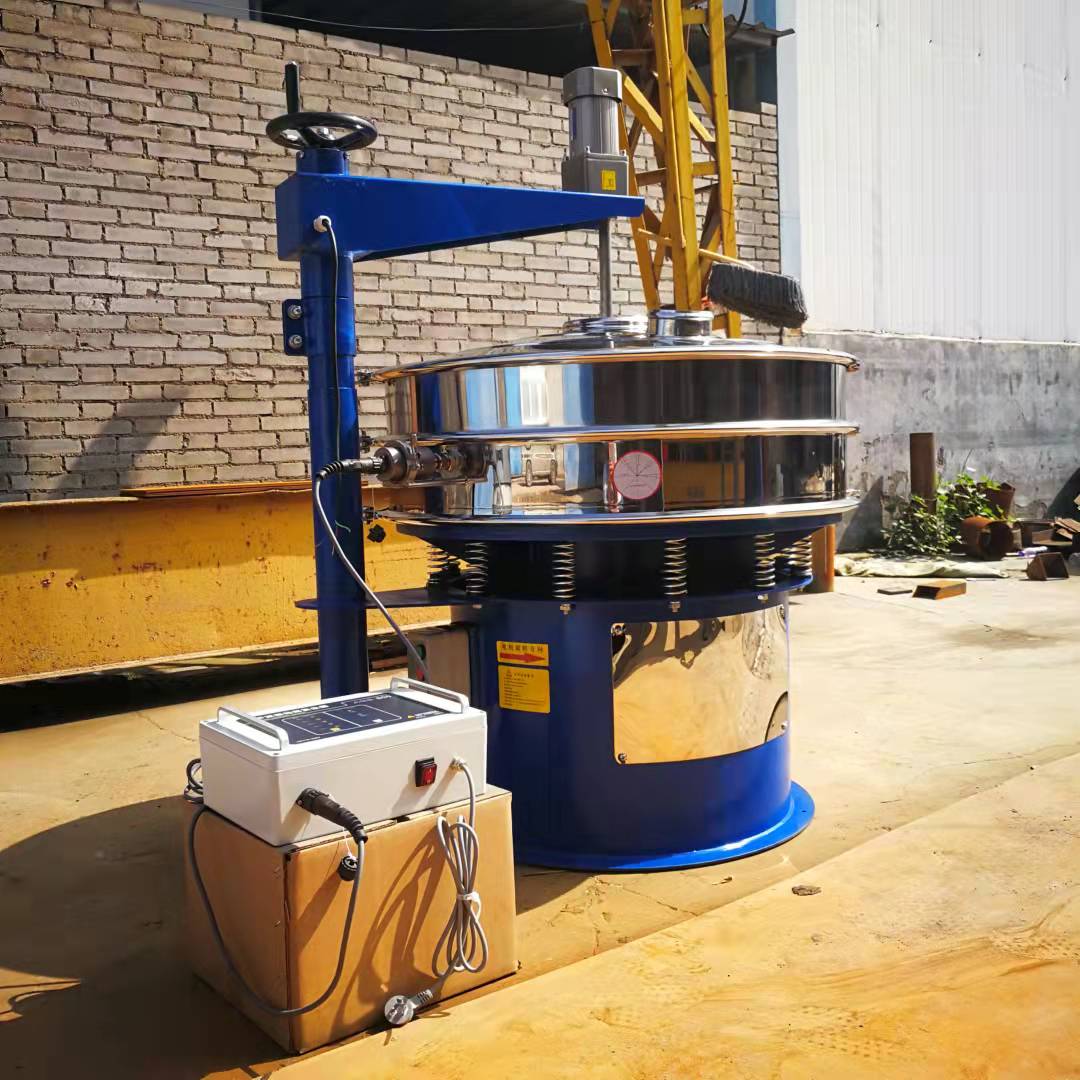
The first symptom is usually blinding in the centre of the deck rather than at the edges. Feed enters, spreads a little, then stops moving. Fines pack into the apertures and the effective open area falls away. Operators often respond by increasing amplitude. That helps briefly, then accelerates wire fatigue and loosens the deck.
A better sequence is to fix the moisture first. Check whether the problem is the process or the weather: material drawn from an outdoor stockpile in a wet season will behave differently from the same material dried in a rotary dryer. If drying is not an option, look at the screening step itself.
Heated decks, ultrasonic de-blinding and ball decks all address the symptom rather than the cause, and each has a cost. Ultrasonic systems work well on fine meshes in the 200 to 500 mesh range, where the wire is too fine to be kept clean by mechanical means. Ball decks suit coarser meshes and heavier material. Heated decks help where condensation forms on the wire, which happens when warm material meets a cold screen body.
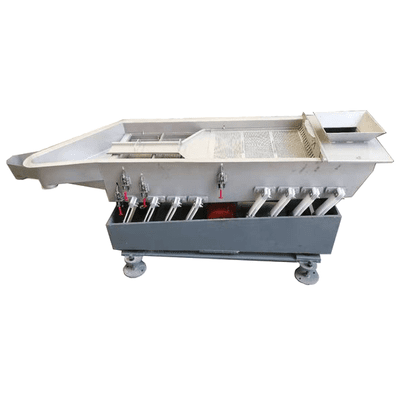
There is also a mechanical answer: give the material less time to settle. A steeper deck angle, a thinner bed and a feed point that spreads material across the full width all reduce the chance of a stationary layer forming. On a rectangular gyratory screener, the feed distributor is often the single most effective change.
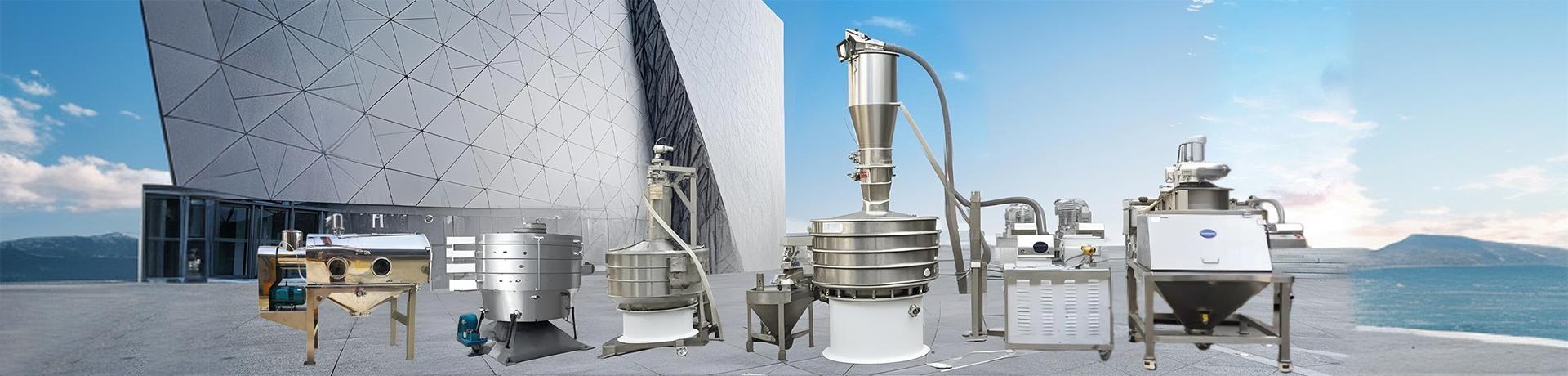
None of this replaces drying. But matching the screen to the material you actually have, rather than the material in the specification, is what keeps a line running through a wet month. Tianteng Machinery builds gyratory and rotary screeners with deck options chosen around the feed, not around a catalogue number.