Language
 English
 Português
 Deutsch
 Français
 русский
 Italiano
 日本語
 عربي
 Español

Make granule condition part of the test
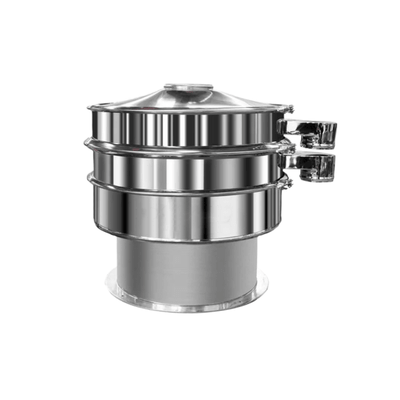
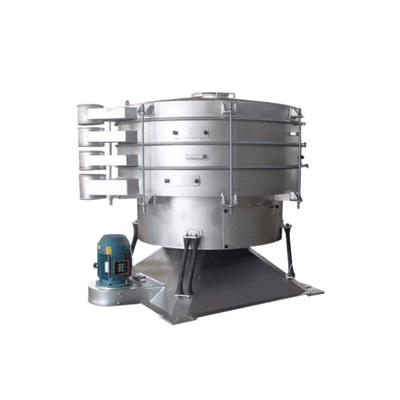
A circular tumbler screen may be evaluated for grading granular products. When the granules are fragile, the trial needs to consider whether handling creates additional fines. This article focuses on recording granule breakage during a screening evaluation, without assuming the same behavior for different products.
Establish the incoming condition
Take a representative feed sample before the trial and record its particle-size distribution using the agreed method. Note moisture condition and visible agglomerates. Keep a reference sample when the product and site procedure permit it. This creates a starting point for interpreting the separated fractions.
Include the transfer points
Record how the material reaches the screen and leaves each outlet. Drop height, intermediate containers and sampling technique can affect fragile particles. Keep these arrangements consistent when comparing tests so breakage from handling is not mistakenly attributed only to the screening motion.
Compare labelled fractions
Collect samples from each outlet over a defined interval. Compare their appearance and particle-size results with the feed reference. If additional fines appear, review the whole material path with the equipment supplier before changing settings. Do not use a visual impression alone as proof that granules remain within specification.
Agree on acceptance criteria
Define acceptable size fractions and product condition before selecting a circular tumbler screen configuration. Provide Tianteng with representative granules, the intended cut sizes and the downstream quality requirement. Any claimed suitability should be tied to the actual sample, handling arrangement and trial results.